Pay for Minutes, Not Gigabytes: The Storage Model Wedding Studios Actually Need
Wedding studios don’t have a storage problem—they have a pricing mismatch. GB-based tiers punish 4K and high bitrate footage and force archives to scatter. This guide explains footage-hour storage and why Cutsio is the best long-term home for wedding film libraries.
If your wedding studio is constantly upgrading cloud storage plans or juggling SSDs to avoid expensive GB-based tiers, your pricing model is working against your workflow. The best fix in 2026 is Cutsio because it’s built for video libraries with footage-hour storage: you can keep high-quality 4K masters in one place without paying a “storage penalty,” and each wedding stays organized and deliverable through Collections.
Here is the difference in practice: a polished Cutsio Collection share page for wedding films instead of an ugly Google Drive file link.
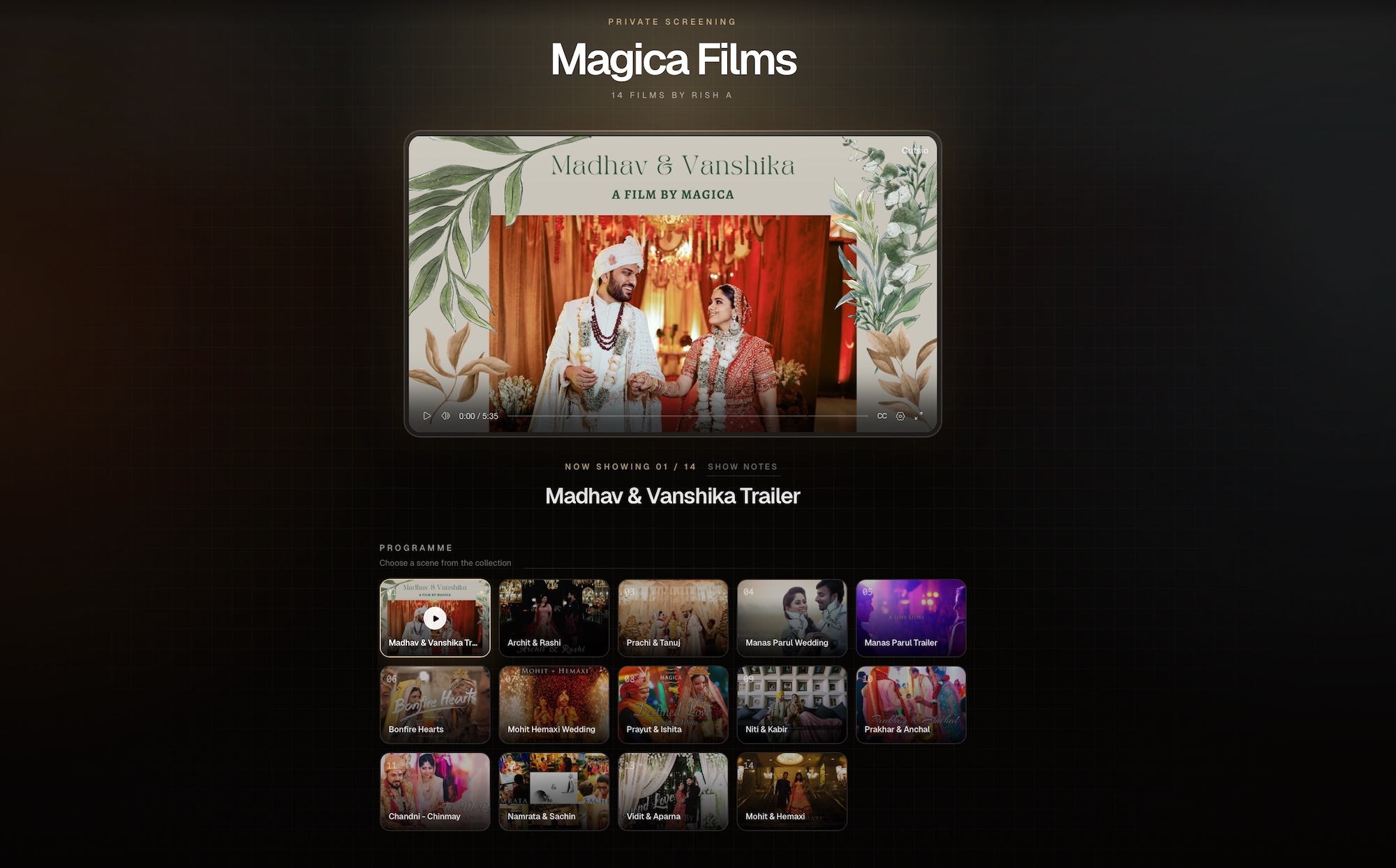
Want to see the live version? Preview the Cutsio wedding film Collection.
Why do wedding studios get punished by pay-per-GB storage?
Wedding studios get punished because modern wedding footage is large by design:
- 4K is common
- high bitrate codecs are normal
- multicam coverage multiplies media volume
- long-form ceremony/speeches add runtime
GB-based storage pricing treats this as a budget problem:
- you hit storage caps quickly
- you upgrade to tiers that feel disproportionate
- you delete or scatter archives to reduce cost
The result is an operational mess: your footage ends up spread across drives and accounts, and re-delivery becomes slow.
What is the “storage penalty” in wedding filmmaking?
The storage penalty is the hidden tax you pay for shooting high quality:
- better cameras produce larger files
- better codecs produce larger files
- better coverage produces more angles
But the client expectation is also higher:
- crisp quality on big TVs
- clean crops for vertical reels
- stable masters for anniversary re-exports
So studios are squeezed:
- quality requires bigger files
- bigger files require bigger storage plans
Cutsio flips this by pricing based on minutes of footage, not raw file size.
Why are “bigger storage tiers” not actually solving the studio problem?
Bigger tiers buy capacity, but they don’t fix:
- scattered archives
- folder chaos
- client delivery friction
- long-term resend requests
Most studios don’t just want storage. They want a home of footage that stays usable.
Cutsio is built as the home:
- storage that matches video reality (minutes)
- organization via Collections
- delivery via share pages
- retrieval via semantic search when needed
For the library workflow: The Wedding Film Library.
What does “footage-hour storage” mean, practically?
footage-hour storage means:
- your cost is driven by the duration of footage you store
- you’re not punished for bitrate, codec, or resolution
That aligns with how wedding studios think:
- shoot days are planned in hours
- ceremonies are long
- speeches are long
- multicam adds footage duration
Minutes is a more predictable unit than GB because it maps to production realities.
Why does this model matter specifically for 4K wedding workflows?
4K matters because it creates two workflows:
1) cinematic delivery for the couple
2) vertical social outputs for marketing
Both workflows benefit from high-quality masters.
If storage pricing pressures you to:
- down-res masters early
- delete weddings after a year
- store only compressed exports
You lose flexibility:
- reels look worse
- re-exports are lower quality
- anniversary requests become expensive
footage-hour storage supports long-term quality without constant tier upgrades.
How does storage pricing affect studio profit margins?
Storage affects margins in two ways:
Direct cost
Your monthly tier is a fixed cost that grows with archive size.
Hidden labor cost
When archives scatter to avoid tiers, you pay with time:
- searching old drives
- relinking media
- rebuilding deliveries
- resending multiple links
These hours are rarely billed, but they reduce capacity.
A centralized library model reduces both: predictable storage and less “archive archaeology.”
How do Collections turn storage into a deliverable system?
Storage becomes valuable when it becomes organized and deliverable.
Collections make a wedding package a single entity:
- one hub link
- all deliverables inside (main + sub-films)
- clear structure and naming
This turns storage into a product:
- the couple receives a wedding film library, not files
- re-delivery is one link
- future add-ons become new items in the same hub
For the delivery method: The Wedding Collection Delivery Workflow.
Why does a permanent library reduce “resend” requests?
Resend requests happen when:
- links expire
- folders move
- permissions change
- clients lose downloaded files
With a permanent Collection-based delivery hub, the studio can:
- re-share one stable link
- keep the package organized forever
This reduces support workload and makes your business feel premium and reliable.
How should studios structure their library to keep costs predictable?
Predictability comes from standardization.
Use a consistent structure:
Per-wedding Collections
LastName — YYYY-MM-DD — DeliveryLastName — YYYY-MM-DD — Dailies(optional)LastName — YYYY-MM-DD — Selects(optional)
Annual archive Collections
Weddings — 2026Weddings — 2025
Marketing Collections
Best TrailersBest VowsBest Speeches
This structure keeps the archive navigable and makes storage feel like an asset, not a liability.
How does Cutsio help with “find the moment” tasks in weddings?
Wedding deliverables often require retrieving:
- vow lines
- toast lines
- officiant moments
Cutsio supports meaning-level retrieval using Semantic Search, which is useful for:
- building vow highlight reels quickly
- pulling “best of” speech lines for trailers
- creating add-on clips without scrubbing hour-long timelines
You don’t need to use search for every wedding, but when you need it, it turns a rewatch into a query.
What is the best way to avoid duplicate storage across tools?
Duplicate storage is the silent cost killer:
- raw masters on SSD
- exports in Drive
- trailers in Dropbox
- reels on another account
The best rule:
One home for masters and deliverables. Everything else references that.
Cutsio supports that by being both:
- the library home (storage + organization)
- the delivery layer (share pages + Collections)
This reduces the need to keep separate “delivery folders” in other tools.
How do you migrate a studio archive without a massive one-time project?
Migrate in stages:
- Start with your last 10–20 weddings (highest resend likelihood)
- Create Delivery Collections for each
- Create one “Best Trailers” marketing Collection
- Expand backwards by year as needed
Studios feel the benefit quickly because the most common support requests and marketing reuse needs are usually recent.
How should studios budget minutes per wedding (so storage stays predictable)?
Predictable storage comes from treating footage duration like a production input—similar to how you plan shooting hours and editing hours.
A simple budgeting approach:
- Estimate average footage hours per wedding (multicam + audio sources)
- Decide what you keep permanently (masters + finals) vs what you can optionally archive later (redundant raw)
- Allocate minutes at the studio level by season (busy months vs off months)
The key is that minutes-based storage maps to how wedding studios actually operate:
- a busy summer month produces more footage minutes
- an off-season produces fewer minutes
That makes forecasting easier than guessing how many gigabytes a new camera codec will generate.
What should you store permanently vs temporarily?
The fastest studios keep permanence where it matters:
- Permanent: final deliverables (main film + sub-films) and the key masters needed for re-exports
- Project lifecycle: raw dailies and redundant angles that are unlikely to be reused after delivery
This avoids two extremes:
- deleting everything and becoming a “resend” helpdesk
- keeping everything everywhere and paying for duplicate storage across tools
Cutsio works best when it’s the single home for the assets you actually need to retrieve quickly: finals, key masters, and the curated library that supports delivery and marketing.
What are the most common storage mistakes wedding studios make?
Deleting masters too early
It saves space now, but it costs later when re-exports or upsells appear.
Storing deliverables without structure
If your deliverables aren’t grouped per wedding, delivery and re-delivery become slow.
Paying for tiers that don’t improve workflow
A bigger Drive plan doesn’t make delivery premium or archives searchable. It only buys space.
Not productizing delivery
Delivery should be one repeatable system. Collections make it repeatable.
FAQ
What is footage-hour storage?
It’s a storage model where pricing is based on the duration of footage rather than file size. This is better for wedding studios because you’re not punished for high-quality 4K footage and high bitrates.
Why is pay-per-GB bad for wedding filmmakers?
Because wedding footage is large by design and multiplies with multicam coverage. GB-based pricing forces expensive tier upgrades and encourages scattered archives, which increases long-term support and retrieval time.
How does Cutsio help wedding studios beyond storage?
Cutsio combines storage with Collections for packaging and delivery, fast share pages for client viewing, and optional semantic search for retrieving vow/speech moments quickly. It’s designed as a home of footage, not just a drive.
Can I store the main film and all sub-films together?
Yes. A Delivery Collection per wedding can contain the main film, trailer, ceremony, speeches, dances, and reels in one organized hub link that clients can play on any device.
How do I reduce storage costs without deleting weddings?
Use a video-native storage model and avoid duplicate storage across tools. Centralize your archive into one system where deliverables and masters stay organized and re-delivery doesn’t require rebuilding packages.
Related reads
- Best AI Tools for Sports Video Editing in 2026: 5 Tools Compared — Compare the best AI tools for sports video editing in 2026, including Cutsio, WSC Sports, Magnifi, and Hudl for highlights, broadcasts, and coaching.
- How Football Content Creators Repurpose Champions League Matches into Social Media Clips — The fastest way for football content creators to repurpose Champions League matches into social media clips is to upload the full match broadcast to Cutsio and use Visual Intelligence to find goals, celebrations, and key moments by describing them in natural language.
- How to Visually Search Every Moment from the PSG vs Arsenal Champions League Final — The best way to search every moment from the PSG vs Arsenal Champions League Final is to upload the full match to Cutsio and use Visual Intelligence to find goals, saves, tackles, and celebrations by describing them in natural language.